
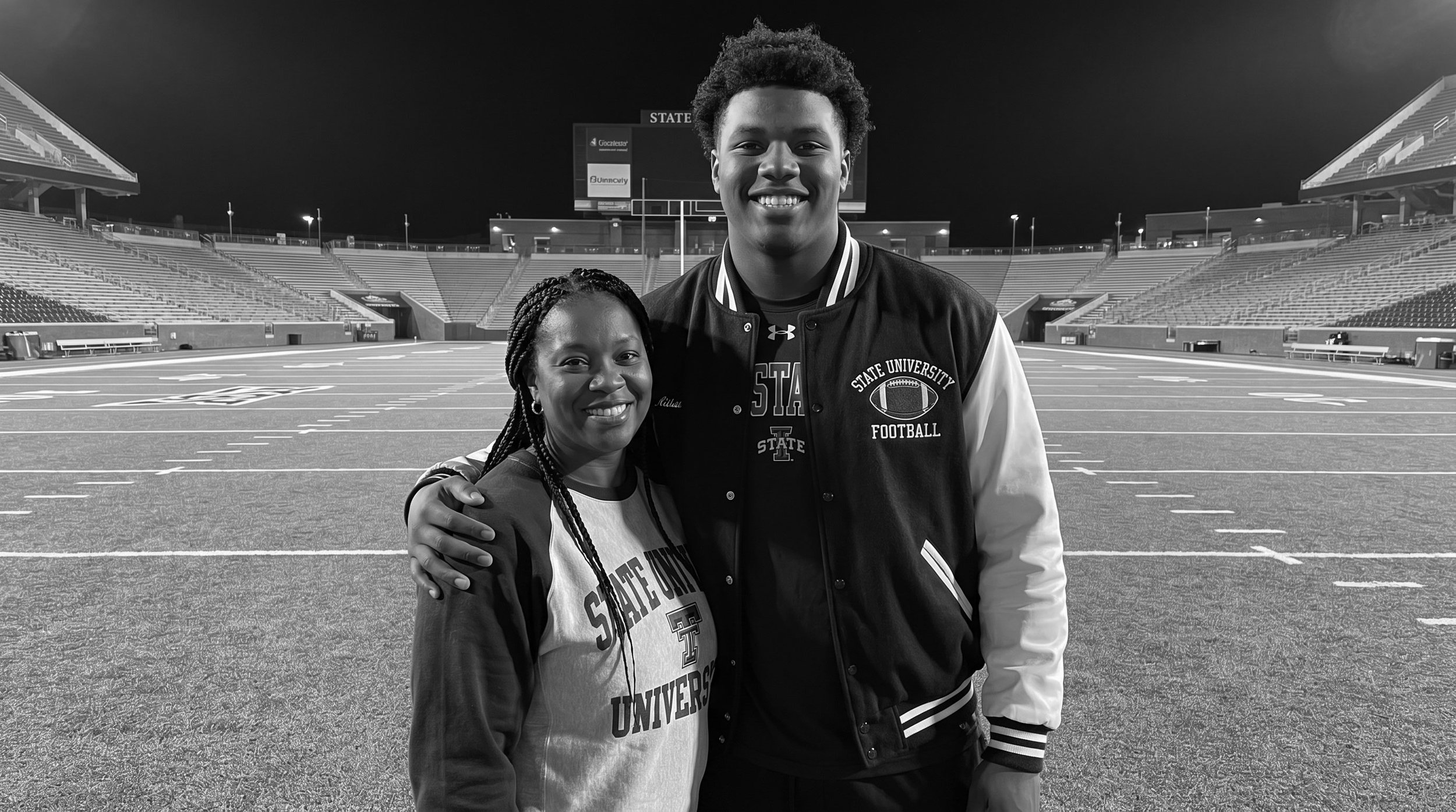
THE PARENT’S GUIDE TO NIL
Protecting Your Athlete’s Future in the New Era of Sports
In the old world of sports, a "student-athlete" was a protected amateur status. Today, your child is a CEO. Whether they are a four-star recruit in high school or a starter at a Power 4 university, their Name, Image, and Likeness (NIL) has measurable market value.
But with value comes liability. Without proper legal and strategic oversight, a single poorly worded contract can lead to the loss of a scholarship, high school disqualification, or permanent damage to a personal brand. At East Coast Sports & Entertainment (ECSE), we believe every athlete deserves a "legal-first" shield.

-
NIL is not a "salary." It is the commercialization of an athlete's identity.
Name: Not just their legal name, but social media handles and nicknames.
Image: Use of photos, video footage, or digital avatars.
Likeness: Anything that makes them recognizable—their voice, signature, or even their "brand" personality on platforms like TikTok and Instagram.

-
As of 2026, the landscape has shifted due to major legal settlements.
Direct Payments: In the college ranks, schools can now share revenue directly with athletes (up to a cap of roughly $20.5M per school).
The $600 Reporting Rule: Any third-party NIL deal worth $600 or more must be reported via the NIL Go platform within five business days.
"Fair Market Value" Enforcement: Federal oversight now ensures that deals aren't "pay-for-play" inducements disguised as sponsorships. If a deal is significantly above market value without real work, it could be flagged.
-
Before your child signs anything, ask these four questions:
Is it "Perpetual"? Does the brand own your child’s image forever, even after they go pro?
Are there "Conflicting Category" clauses? If they sign with a local energy drink, does it block them from a future national Gatorade deal?
What is the "Deliverable"? Does the contract clearly state how many posts, appearances, or signatures are required?
Is there a "Morals Clause"? Does the brand have the right to terminate (and keep the money) if your child is involved in a controversy?
-
Most "influencer agencies" look for a quick commission on a single social media post. We look at the contractual lifecycle.
Attorney-Led: Our founders are lawyers. We don't just read the "pay" line; we read the "indemnity" and "termination" lines.
Long-Term Brand Building: We don't want a deal that pays today but ruins a "pro" endorsement tomorrow.
Compliance Concierge: We handle the "NIL Go" filings and university disclosures so the athlete can focus on the field.

NIL STATE CHEAT SHEETS
The 2026 Parent’s Guide
A State-by-State Compliance Roadmap for High School & College Families
The ECSE Standard: Regardless of the state, three "Universal Truths" apply to every athlete we represent:

No School
Marks
✔ Never use school jerseys, logos, or facilities in a deal.
No Prohibited Categories
✔ Stay away from alcohol, tobacco, gambling, or adult entertainment.
Mandatory Disclosure
✔ Always report deals to your school or via the NIL Go portal within 5 days.
COMPLIANCE BY STATE
-
Status: PROHIBITED
The Rule: The AHSAA maintains strict amateurism. Any athlete using their athletic skill for "gain" (money or gifts) forfeits their eligibility.
The ECSE Strategy: We focus on Brand Preparation. We help Alabama families build the "Social Media Infrastructure" now, so that the moment the athlete signs a college letter of intent, they have a valuable audience ready to monetize legally.
-
Status: PERMITTED (Limited)
The Rule: Arkansas allows NIL deals, but they must be "fair market value" for actual work (camps, posts, etc.).
The Risk: Public schools often have varying local board policies.
The ECSE Strategy: We review local district bylaws to ensure your child doesn't violate a "hidden" school board rule while complying with state law.
-
Status: PERMITTED (Standard-Bearer)
The Rule: California is the most permissive state. Athletes have broad rights to sign endorsements, provided they do not use school intellectual property.
The Risk: "Predatory" scouting agents. California's market is flooded with unlicensed reps.
The ECSE Strategy: We provide legal-first vetting for high-value California deals to ensure your child isn't signed to a "lifetime" contract by a shell company.
-
Status: PERMITTED
The Rule: Allowed as of 2024. However, "recruiting inducements" are strictly policed. If a deal looks like a "bribe" to attend a certain high school, the state will ban the athlete.
The ECSE Strategy: We document the "Work-for-Pay" trail to prove the deal is a legitimate business transaction, protecting your child from "transfer-related" eligibility investigations.
-
Status: PERMITTED
The Rule: Georgia allows NIL but mandates that all contracts must end within 30 days of college enrollment or 10 days after high school graduation.
The Risk: Contract "Overhang"—signing a deal that accidentally conflicts with a future college scholarship's brand (e.g., Adidas vs. Nike).
The ECSE Strategy: We include "Exit Clauses" in all GA contracts to ensure a clean transition to the collegiate level.
-
Status: PERMITTED
The Rule: Kentucky allows NIL but strictly forbids any deal that takes place during "school time" or team travel.
The Risk: Passive income (like a merch store) can be tricky if not managed correctly.
The ECSE Strategy: We manage the "Content Calendar" to ensure no social media posts are timestamped during school hours.
-
Status: PERMITTED
The Rule: Under recent 2025/2026 legislation, high school athletes have expanded rights to earn. Parental consent is mandatory for all athletes under 18.
The Risk: Complex "Right of Publicity" laws unique to Louisiana’s civil code.
The ECSE Strategy: As an agency with a legal backbone, we ensure your child's "Publicity Rights" are protected long-term under LA’s specific legal framework.
-
Status: PROHIBITED (with "Escrow" Exception)
The Rule: While direct pay is currently banned, athletes can sometimes sign deals where money is held in a Restricted Trust/Escrow until graduation.
The Risk: Accidentally touching the money before graduation leads to an immediate permanent ban.
The ECSE Strategy: We set up the legal trust structures required to capture value now without triggering an eligibility crisis.
-
Status: PERMITTED (Limited)
The Rule: Missouri recently moved toward allowing NIL, but athletes must "prove" the work performed. No "pay for being an athlete."
The Risk: Broad "Morals Clauses" that give brands too much power.
The ECSE Strategy: We negotiate the "Deliverables" so the athlete knows exactly what they owe the brand, with no room for dispute.
-
Status: PERMITTED
The Rule: NIL is legal, but disclosure to the principal is a non-negotiable first step.
The Risk: School administrators who aren't fully trained on NIL yet may give incorrect advice.
The ECSE Strategy: We act as the "Buffer," providing the school's AD with a professionally prepared compliance packet so they don't have to guess.
-
Status: PROHIBITED (Public) / PERMITTED (Private)
The Rule: Public schools have a hard ban. Private schools (SCISA) generally allow it.
The Risk: Moving from a Private to a Public school can instantly void an active NIL deal.
The ECSE Strategy: We specialize in "Eligibility Audits" for SC families considering a school transfer.
-
Status: PERMITTED (Instructional focus)
The Rule: Tennessee allows NIL, particularly for "Instructional Services" (camps/lessons), provided there is no school affiliation.
The Risk: Accidentally using a TSSAA accolade (e.g., "State Champion") in an ad is a violation.
The ECSE Strategy: We "Sanitize" all marketing copy to ensure no TSSAA-protected terms are used in paid promotions.
-
Status: PERMITTED (17+ Age Rule)
The Rule: High school athletes aged 17+ can sign deals, but they cannot receive the payment until they are officially enrolled in college.
The Risk: "Pre-payment" traps. Some brands try to pay early, which kills UIL eligibility.
The ECSE Strategy: We structure "Deferred Compensation" agreements that are UIL-compliant but legally binding for the brand to pay upon enrollment.
-
Status: PERMITTED
The Rule: Virginia was a leader in East Coast NIL. They allow deals but have a zero-tolerance policy for using school "insignia."
The Risk: Conflict with "Team Apparel" deals (e.g., your kid is a Nike athlete but the high school wears Under Armour).
The ECSE Strategy: We draft "Apparel Carve-outs" in every contract to protect your child during official school events.

Don't Navigate This Alone.
If your child is being approached by a brand, collective, or scout, do not sign until you speak with a legal professional.Contact East Coast Sports & Entertainment today for a free Eligibility Audit.
*The rules above are current as of May 2026, but in the NIL world, a "final rule" can change in a single board meeting.